
Automation eliminates the hidden costs associated with inventory shrinkage and administrative errors. It replaces intuition with precise data and allows management to focus on growth rather than maintenance. Investing in a unified platform is the most effective method to secure the long term profitability and stability of the enterprise in a competitive market.
The transition from manual processes to automated systems is a strategic necessity for modern retailers. Operating a business on disconnected tools and spreadsheets limits the ability to scale and introduces unnecessary risk.
Conclusion Enhancing Retail Profitability Through Automation
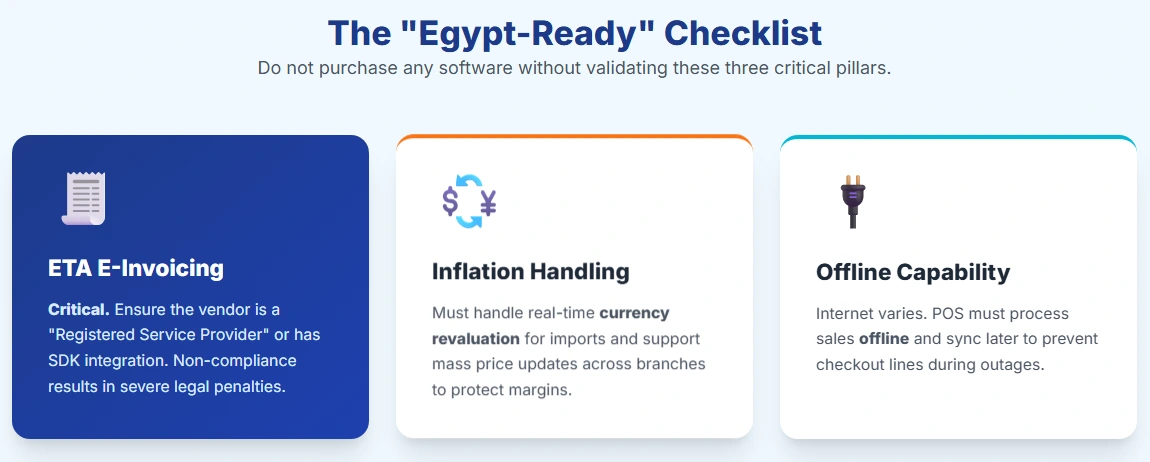
Reliance on a continuous internet connection creates a significant operational risk. Network latency or failure can halt commerce entirely in a cloud erp only environment. The optimal technical architecture utilizes local processing on the terminal hard drive. This ensures that transaction speed remains fast and operations continue uninterrupted during internet outages. Data synchronizes automatically with the central server once connectivity is restored.
Offline Operational Capabilities for Network Stability
The point of sale terminal functions as an ecosystem. Hardware conflicts often arise from protocol mismatches rather than device failure. It is essential to select a system that supports industry standard communication protocols for thermal printers and cash drawers. furthermore compliance with electronic receipt regulations requires the use of 2D scanners capable of reading QR codes rather than traditional line scanners.
Integration with Barcode Printers Scanners and Cash Drawers
Software stability depends heavily on the integration with physical hardware. A high performance system must communicate seamlessly with all peripherals to prevent workflow disruptions at the checkout counter.
Hardware Compatibility and Technical Requirements
Success in retail depends on understanding customer behavior. Analytics tools identify which products are performing well and which items are stagnant. This insight enables the business to reorder high demand inventory quickly. It also highlights slow moving stock that requires discounting before it becomes a financial liability. Data driven planning is superior to reliance on intuition.
Improved Decision Making Based on Sales Trends
Manual reporting often leads to delays and inaccuracies. An advanced system calculates the cost of goods sold immediately after every transaction. This capability allows management to view the actual gross profit for each sale rather than just the total revenue. Access to real time financial data eliminates the lag between physical operations and accounting records.
Generating Accurate Reports and Real Time Data
This is where working with an experienced local partner matters. 2B Solutions helps businesses set up reporting and analytics in a way that matches how managers actually make decisions, not just what the system can technically produce. The goal isn’t more reports, but clearer visibility for planning, forecasting, and day-to-day control.
With an integrated ERP setup, reporting and analytics update in real time. Sales, inventory, and financial data all live in one place, making it easier to spot trends early and adjust before problems grow. This turns raw numbers into insights teams can actually act on.
Making smart decisions in retail depends on timing. When managers wait until the end of the month to review reports, they’re already reacting to old information. Prices change, stock moves, and customer behavior shifts faster than monthly reports can keep up.
Reporting, Analytics, and Strategic Planning
Value Added Tax computations are complex in high volume environments. Relying on spreadsheet based calculations invites human error and regulatory scrutiny. A comprehensive retail management erp embeds current VAT rules directly into the transaction logic. The system automatically apportions tax for every sale based on product classification. This automation streamlines tax return preparation by generating accurate financial reports directly from the inventory management software and sales records. Adopting a specialized erp for retail ensures that the business remains compliant with evolving fiscal laws while minimizing administrative overhead. For any growing enterprise an erp for retail industry standards is the only viable method to manage these financial obligations securely.
Automated VAT Calculations and Tax Filing
The transition to the electronic receipt system is mandatory for most retail enterprises in Egypt. Compliance requires the real time transmission of sales data to the tax authority portal upon the completion of every transaction. Modern point of sale software egypt generates a unique invoice ID and a QR code for immediate verification. Implementing erp solutions that are certified by the tax authority ensures that data flows securely to government servers. This automation removes the need for manual batch submissions and significantly reduces the risk of audit penalties.
Electronic Receipt (E-Receipt) System Integration
The Egyptian Tax Authority has transformed compliance standards. Retailers must now submit sales data digitally. Manual record keeping is no longer sufficient and poses significant financial risk. A robust retail management system is essential for meeting these strict legal requirements without disrupting daily operations.
Compliance with Egyptian Tax Authority Regulations
A unified retail management ERP synchronizes inventory across all channels in real time. A physical sale immediately decrements the global stock count which prevents the online overselling of out of stock items. This eliminates the need for forced refunds and protects brand reputation. Furthermore the system automates financial reconciliation by pushing sales data directly to the general ledger. This removes the labor costs and error rates associated with manual accounting entries.
The most significant operational cost in retail is data siloing. Operating separate systems for point of sale, e-commerce, and accounting requires redundant data entry which inevitably leads to errors.
System Integration: Connecting POS, E-Commerce, and Accounting
This reduction in transaction time has a cumulative effect. In a store processing several hundred transactions daily an extra ten seconds per transaction results in hundreds of hours of wasted labor annually for each register.
Checkout speed is a direct function of the POS interface design. The efficiency of a workflow can be measured by the number of interactions required to complete a sale. Legacy systems often require seven to ten user touches per transaction. Modern POS software reduces this to an optimal three interactions: scan item, select payment, and print receipt.
Faster Daily Operations and Checkout Processes
The efficiency of a retail location is measured by its throughput. Long customer queues are not a sign of high demand but of friction within the checkout process. Every second of delay at the point of sale terminal translates directly to reduced revenue and a poor customer experience.
Optimizing Daily Store Operations and Efficiency
An ERP system enforces a digital match between the Purchase Order and the delivery. The receiving team must scan goods against the approved order to complete the transaction. This process ensures discrepancies are flagged immediately. While technology cannot prevent all issues it significantly reduces the likelihood of costly administrative mistakes.
Significant inventory loss occurs during the receiving process rather than at the sales counter. Suppliers may deliver incorrect quantities or damaged goods. If warehouse staff sign for deliveries without a strict count the business pays for missing items.
Reduction of Human Error in Stock Counting and Receiving
Barcode scanning changes the workflow from manual entry to instant verification. Scanning a large shipment is significantly faster than recording details by hand. Furthermore the system validates every item immediately. It prevents errors by alerting the user if they scan a product that does not match the original order.
Manual data entry is a primary cause of inventory errors. Relying on staff to type product codes leads to unavoidable mistakes.
Implementation of Barcode Scanning for Stock Accuracy
A unified system provides a single view of inventory across all locations in real time. This visibility allows you to transfer stock intelligently from branches where items are moving slowly to locations where demand is high. You avoid purchasing unnecessary new stock when you already have the items available in a different warehouse.
Retailers with multiple locations often struggle with visibility across branches. Staff members waste time manually contacting other stores to locate products for customers. This manual process is inefficient and frustrates buyers.
Achieving Full Control Over Multi-Branch Inventory
The primary challenge for retailers is the discrepancy between system data and physical stock. You cannot sell items you cannot find and you cannot reorder effectively if your data is incorrect. An integrated ERP system replaces estimation with precise control.
Inventory represents capital sitting on your shelves. If you do not track it accurately you are effectively losing visibility of your assets.
Retail Inventory and Warehouse Management Functions
Monthly Cost 40 hours times X EGP.
Hourly cost of that employee X EGP.
Average time spent 10 hours per week.
Ask yourself how many hours your team spends manually reconciling sales against inventory every month.
The Is It Worth It Math
Integrated erp for retail connects the dots. If you move stock from your warehouse to a branch the ERP tracks the transfer. If you sell an item it updates your accounting ledgers immediately.
Standalone POS Software is good for taking money printing receipts and basic end of day reports. However it has a massive gap. It does not know what happens after the sale. It does not track your supplier debts. It does not tell you that your branch in Alexandria has the item your customer in Nasr City wants. It is essentially a calculator with a cash drawer.
It is a fair question. To decide if you need to upgrade look at your current pain points.
This is the most common question business owners ask. I already have a POS system. Why do I need an ERP?
Limitations of Standalone POS Systems vs Integrated ERP
A unified retail management erp eliminates this manual latency. The system monitors stock levels against pre defined Reorder Points in real time. When inventory dips below the safety threshold the system automatically drafts a Purchase Order for the supplier. The managers role shifts from chasing information to approving decisions.
During those 48 to 72 hours of delay every potential sale of that item is lost revenue. In competitive markets utilizing point of sale software egypt where inventory turnover is high this latency is unsustainable.
Replenishment arrives on Day 5.
The warehouse verifies physical stock and contacts the supplier on Day 3.
The floor manager manually notes the shortage and texts the warehouse on Day 2.
A product sells out on the shelf on Day 1.
In a traditional setup information travels slowly.
The most expensive gap in retail is the disconnect between the Front of House customer transactions and the Back Office procurement and accounting. This gap creates the Stockout Cycle.
Unifying Point of Sale POS and Back Office Functions
Operational inefficiency usually stems from fragmentation. A typical retailer often relies on a disjointed ecosystem consisting of a legacy system for the cashier isolated spreadsheets for inventory and a manual ledger for supplier debts. This lack of integration forces the sales team and the warehouse to operate independently and often with conflicting data.
Many retail leaders view software merely as a utility for printing receipts or tracking daily cash totals. This perspective is a strategic error. In a high volume environment your digital infrastructure is not just a support function. Implementing robust erp solutions acts as the central nervous system of your enterprise.
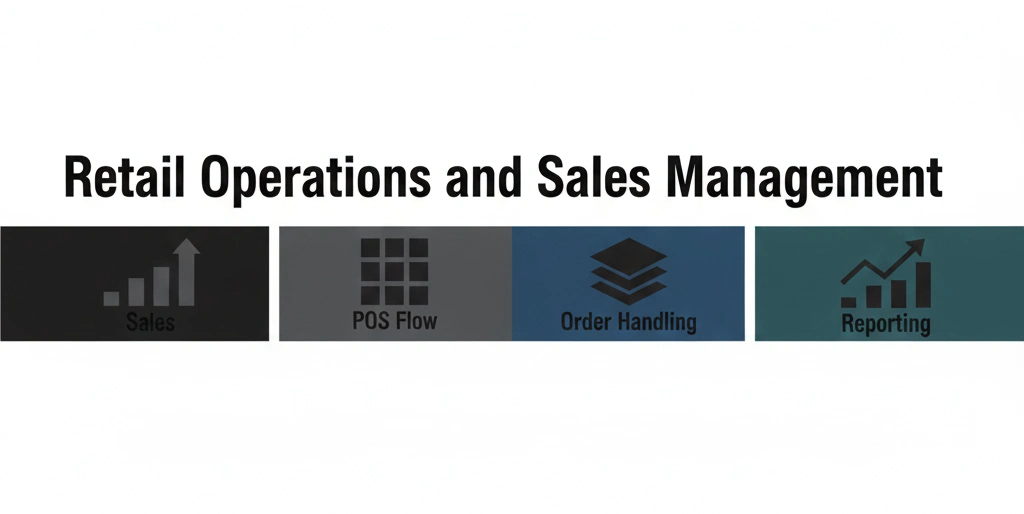
The Role of ERP in Modern Retail Operations
At this stage a standard cash register stops being a tool and starts being a bottleneck. To fix the empty shelf problem you need to move beyond simple transaction recording and deploy dedicated inventory management software.
Whether you are managing a single boutique or a growing chain of stores the hurdle is rarely the sale itself. You know how to sell. The real challenge is knowing exactly what you have where it is located and what your actual margins look like after the dust settles.
If you run a retail business in Egypt this scenario probably sounds familiar.
The customer is annoyed. You look disorganized. Somewhere in your back office an accountant is about to have a headache trying to figure out where that inventory went.
Have you ever stood in front of a customer checked your screen seen three items in stock and walked to the shelf only to find it completely empty?
Check this for more info: Cloud Inventory System